
Why the Bottom Turn Defines Everything That Follows
The bottom turn is the steering wheel, accelerator, and positioning tool of high-quality surfing. It determines how much speed reaches the wave face, which part of the section becomes available, and whether the next maneuver feels connected or forced. A clean bottom turn can send a surfer toward the lip with enough projection to attack vertically. A weak one leaves the board low on the face, behind the section, or moving on a line that makes the next turn almost impossible.
The familiar instruction to “bend your knees” is not wrong, but it is incomplete for an intermediate surfer. A passive crouch lowers the body without necessarily loading the board, engaging the rail, or directing energy toward the pocket. The effective bottom turn is a moving coil and release. Momentum from the drop is absorbed through the ankles, knees, hips, and board, then redirected upward through deliberate rail pressure, body rotation, and extension. For a practical foundation in compression and extension surfing, the key idea is simple: get compact to control the trough, then rise through the turn to create vertical speed.
The Anatomy of Compression and the Kinetic Chain
Functional compression begins at the feet. As the board drops toward the trough, the ankles flex to keep the feet connected to the deck and the centre of mass stable over the stringer. The knees then bend in the direction of travel, while the hips lower without collapsing the chest onto the front knee. This sequence matters because each joint contributes to force absorption and redirection. When the hips hinge excessively at the waist, the shoulders fall forward, the rear end pushes out, and the board loses a clean connection between the lower body and the upper body.
The useful position is athletic rather than artificially low. The knees should remain mobile, the pelvis should stay centred, and the chest should remain available to rotate toward the intended line. The back knee can move inward toward the front knee during the coil, helping the hips and shoulders stay aligned with the turn. Separated knees often create a wide, unstable base that encourages the surfer to sit backward or push the butt away from the board. If pain, instability, or knee collapse appears, reduce the load and seek qualified medical guidance rather than forcing deeper compression.
Static crouching restricts the very movement that generates speed. A surfer can be low and still be slow if the legs remain passive, the rail is not loaded, and the body never extends. Think of the lower body as a spring. Compression stores usable potential energy, but only a coordinated release converts it into acceleration. This is also why the ideal depth changes with the wave, board, and maneuver. A small, weak shoulder may require a deeper load and stronger extension, while a powerful, hollow wave may demand a compact position primarily for control and survival.
- Flex the ankles first so the feet stay connected to the board.
- Bend the knees while keeping them tracking over the feet rather than collapsing inward.
- Lower the hips without folding sharply at the waist.
- Keep the chest and shoulders available to rotate toward the pocket.
- Extend only after the board has completed the loaded part of the turn.
Rail Engagement Mechanics and How to Stop Bogging
A bottom turn is not simply a matter of standing on the fins, nor is it the same as leaning a rail while trimming down the line. The fins provide resistance and pivot, especially under the rear foot, but the curved outline rail is what slices and holds through the face. The board needs enough rail engagement to create a clean arc, while the tail and fins remain loaded enough to prevent the board from sliding or stalling. The best turns blend both functions: the rear foot controls the tail, and the body directs the engaged rail along the chosen radius.
Bogging usually begins with poor pressure distribution. Too much front-foot weight drives the nose and forward rail into the water, slowing the board and sometimes catching the rail abruptly. Setting the rail too early can create the same problem, particularly when the wave face is still too flat to support the angle. Foot placement also matters. The rear foot should be positioned over the tail pad or close to the board”s turning zone, not so far forward that the fins become difficult to engage. A tail pad placed too far forward can encourage a surfer to stand forward of the effective pivot point, producing a long, sluggish turn.
As the board approaches the flats, maintain speed through the drop, then move pressure progressively toward the back foot. The shoulders and head should lead the intended line, while the rear hand may reach toward the face as a stabilizing reference on a deeper turn. Avoid throwing the entire body into the water before the board has established its edge. Rail pressure should build progressively, not arrive as a sudden stomp. The following comparison helps identify whether the problem is pressure, timing, or equipment setup.
| Bogged rail symptom | Likely cause | Hydrodynamic fix |
|---|---|---|
| Nose slows or catches during the setup | Excessive front-foot pressure | Keep momentum through the drop, then shift pressure back as the board reaches the trough |
| Board stalls halfway through the arc | Rail set too early on a flat face | Delay deeper engagement until the face becomes steeper and more supportive |
| Tail feels loose and unresponsive | Rear foot too far forward or too little tail pressure | Move the back foot onto the turning zone and load the fins progressively |
| Board catches suddenly and throws the surfer forward | Too much rail sunk at once | Use a smoother ankle and knee flexion, with the upper body remaining centred |
| Turn becomes wide and slow | Stance too open or hips not rotating | Bring the knees into a connected athletic position and direct the chest toward the exit |
The Slingshot Effect Unweighting and Pocket Projection
The release phase begins when the board has travelled through the deepest part of the arc and starts climbing the face. The loaded legs extend, but extension should not resemble a jump straight upward. It is a directional release that sends the board toward the lip. The ankles, knees, and hips lengthen in sequence, reducing pressure at the right moment so the board can accelerate up the face rather than remain buried in the trough. A well-timed extension feels like the board has been launched from the bottom of the wave.
Upper-body rotation supplies the steering command. The leading arm opens toward the section, the chest turns up the face, and the head looks through the intended line. This rotation allows the lower body to follow rather than forcing the surfer to twist the board with the feet alone. The rear arm can remain closer to the face during the loaded phase, then follow the rotation as the surfer rises. The result is a connected kinetic chain, with the eyes and shoulders initiating direction, the hips transferring it, and the legs delivering the final projection.
Timing depends on the wave”s shape. Watch for the trough to firm up under the board, the face to steepen, and the pocket to begin drawing upward toward the breaking section. Initiating the drive too early sends the board across a weak, flat part of the wave. Waiting too long leaves the surfer behind the apex, where the lip may close before the board arrives. “Apex surfing,” a coaching concept highlighted in performance discussions around pocket projection and wave power, is fundamentally about reaching the most powerful point with the correct speed and angle.
- Enter the trough with the board controlled and the body compressed.
- Feel for the moment when the face begins to steepen and support the rail.
- Shift the chest and leading arm toward the pocket before forcing the legs to extend.
- Drive through the legs as the board changes direction from across the bottom to up the face.
- Finish tall enough to release the board into the lip, while remaining ready for the next compression.
Adapting Your Bottom Turn Across Different Wave Profiles
On a flatter open-face wave, the bottom turn usually needs to be drawn out. The board travels farther across the trough, and the surfer must preserve speed while gradually building rail pressure. A wider line gives the wave time to steepen and offers more face on which to project upward. Excessively tight turns in these conditions often scrub speed because the board is forced to pivot where there is not enough energy to support the arc.
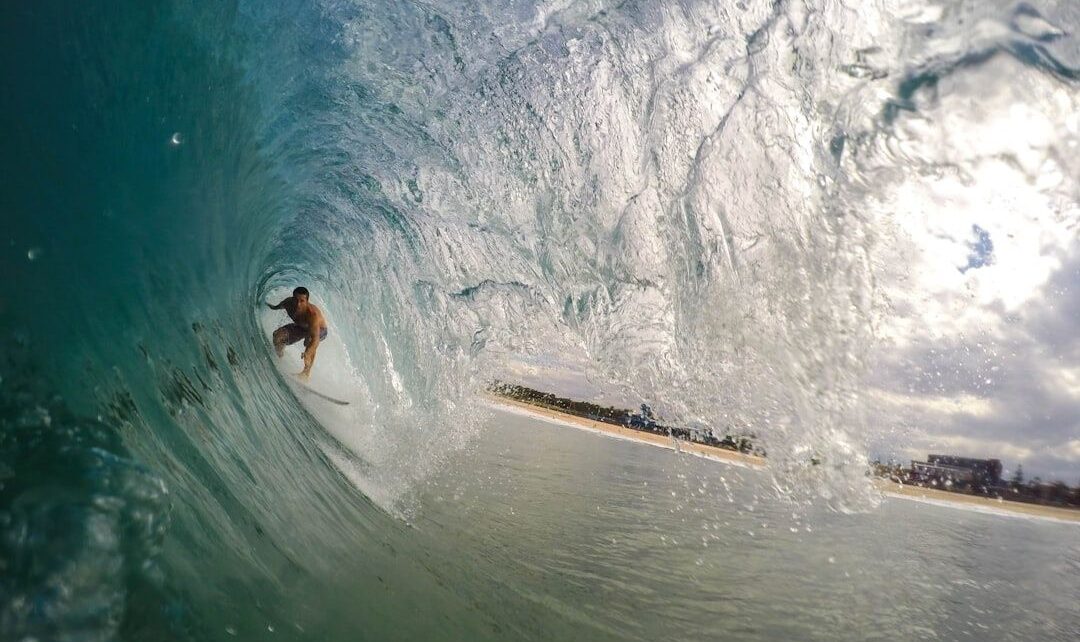
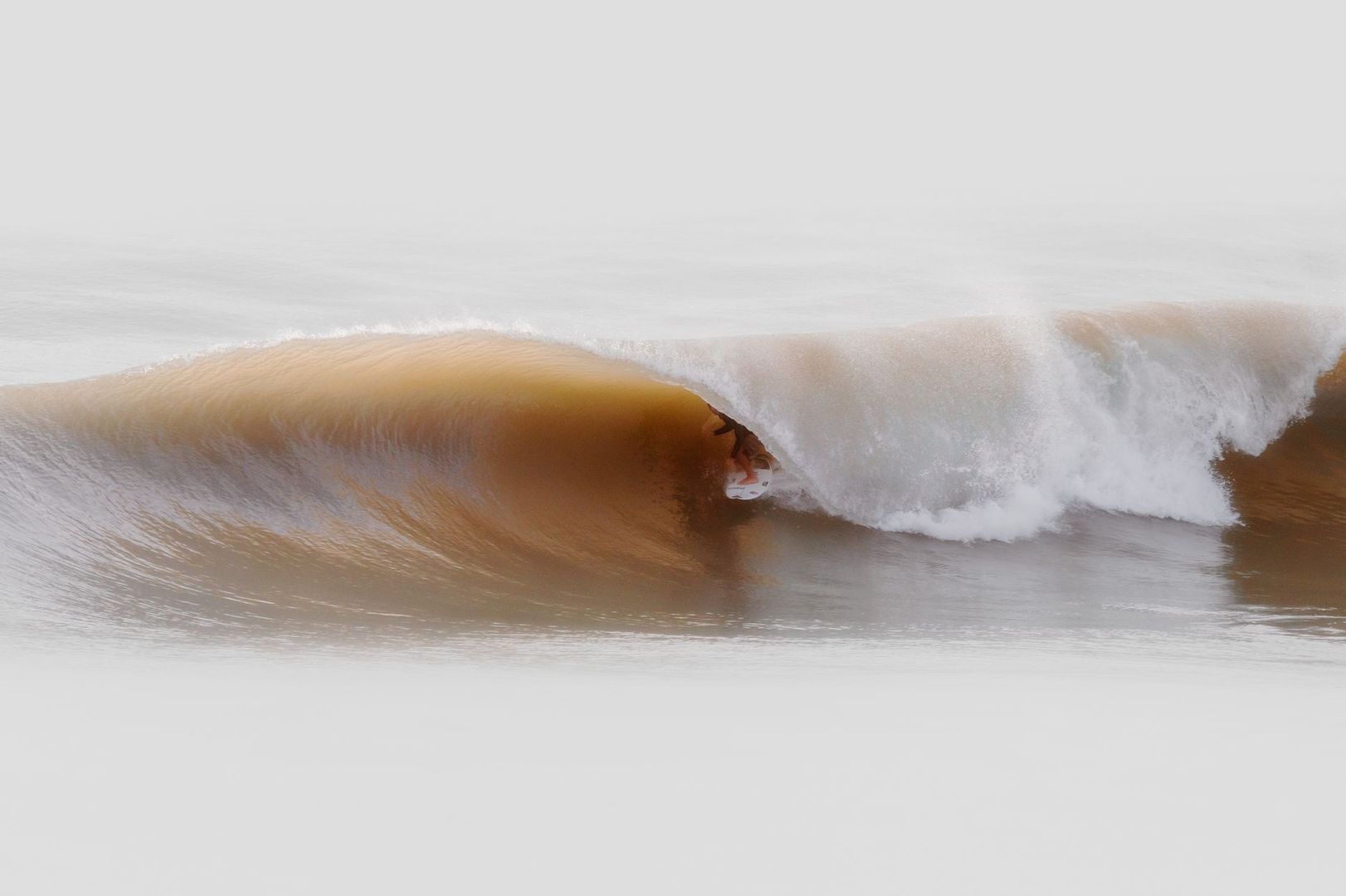
On a steep or hollow beach break, the turn becomes shorter and more compact. The surfer may need to absorb a rapid drop, keep the centre of gravity low, and redirect immediately toward the pocket before the lip outruns the line. Stance width, board volume, rail shape, and tail design all influence how quickly the board responds. A wider stance can improve stability in a fast, critical section, but an overly wide stance limits hip rotation and makes the turn feel disconnected.
- Use a longer, smoother arc on weak or open faces to conserve speed.
- Use a tighter radius when the wave is steep and the pocket is close to the trough.
- Keep pressure slightly forward while trimming, then move decisively toward the tail for the turn.
- Match stance width to the required mobility, not simply to the desire for stability.
- Choose the line before the apex, because late corrections usually create bogging or a missed section.
Turn Trough Momentum into Pure Vertical Power
A powerful bottom turn is a synchronized unit rather than a collection of isolated movements. Compression absorbs the drop and stores energy through the lower body. Rail engagement converts that load into a controlled arc, with the fins and outline working together instead of competing. Unweighting then releases the stored force as the board climbs, while the leading arm, chest, and head direct the projection toward the pocket.
Progress becomes faster when the movement is trained away from the wave as well as in it. Skate-based drills can develop ankle, knee, and hip flexion, directional rotation, and the feeling of extending through a turn. Video review is equally valuable. Look for a collapsing waist, separated knees, front-foot overload, premature rail engagement, or a failure to extend through the apex. Make one adjustment at a time, test it in manageable conditions, and protect joint quality by stopping when pain replaces normal muscular effort. Then take the clearest cue into the lineup: compress with purpose, engage the rail progressively, and rise into the section before the wave”s best energy passes by.