
Before You Swap Boards How Fin Cant and Foil Truly Shape Your Turn
The Quiver Trap and the Hidden Hydrodynamics Under Your Tail
When rail-to-rail surfing feels sticky, late, or strangely sluggish, the board often receives the blame first. Intermediate surfers commonly point to volume, rocker, outline, or tail shape and assume a different model will solve the problem. Sometimes that diagnosis is correct. Just as often, the real bottleneck sits beneath the tail, where fin geometry determines how efficiently the board converts speed into lift, hold, and directional change.
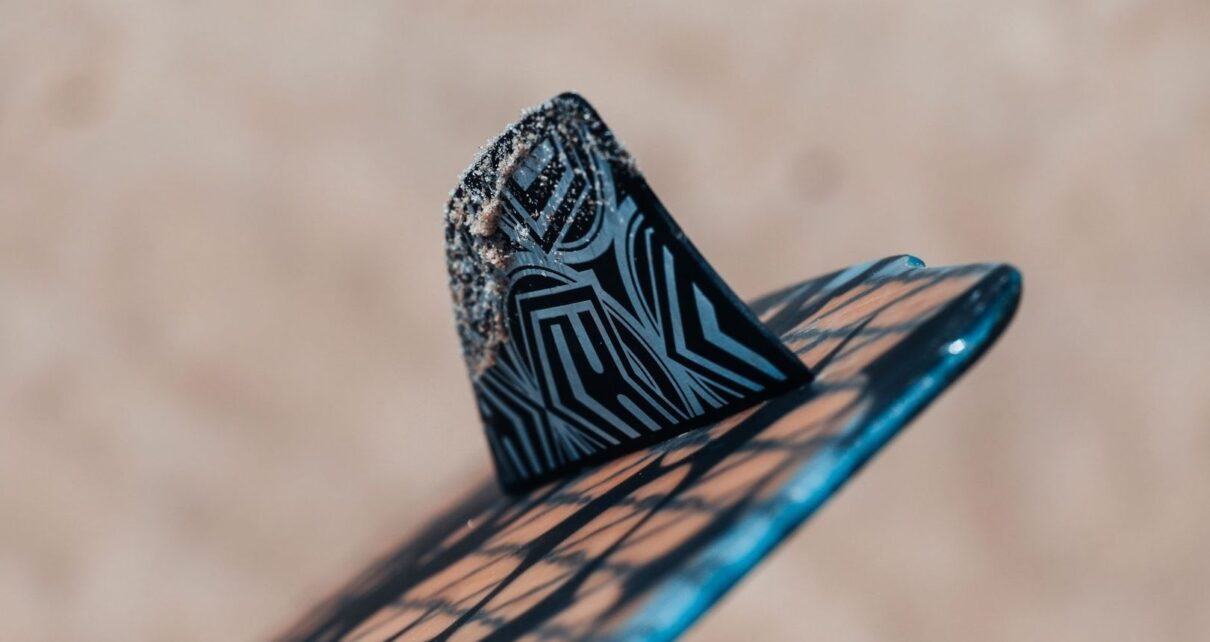
A fin is not simply a stabilizer attached to the board. Its foil, cant, toe-in, rake, depth, and area decide how water flows around the fin as the board accelerates and rolls onto a rail. A change of only a few millimeters in toe-in or a small difference in cant can alter the effective angle of attack. That can change whether the board projects cleanly through a bottom turn, releases smoothly off the top, or feels locked to the face. An Authoritative Source on movement and equipment mechanics can help place these fin adjustments within the broader interaction between athlete and board.
This is useful news for anyone with a serviceable quiver. Before spending thousands on another board, treat the fin setup as a mechanical tuning system. By understanding what foil, cant, and toe-in do, you can make controlled changes to an existing board and learn exactly how its personality is being shaped. For surfers evaluating their stance and rail hold, sports biomechanics research on surfing mechanics offers a valuable reminder that equipment and body movement must be considered together.
Foil Physics Decoded From Flat Faces to Lift Vectors
Fin foil describes the cross-sectional shape of the fin from its leading edge to its trailing edge. The principle resembles an aircraft wing, but the direction of force is different. An aircraft wing generates lift upward, while a surfboard fin is mounted vertically and produces a lateral force that helps resist sideways drift. As water moves across surfaces with different curvature, velocity and pressure vary around the foil. The resulting pressure differential creates a lift vector that supports grip, turning, and, indirectly, forward projection.
The board does not experience this force in isolation. As the surfer rolls the board and loads the rail, the fin works at a changing angle of attack. Too little angle can feel vague, especially during a committed turn. Too much angle can push the fin toward stall, when flow separates and the fin loses clean hold. The relationship between inclination, velocity, and lift is explained clearly in this NASA guide to lift effects. Surfboard fins operate in a complex, unsteady environment, so aircraft data cannot be copied directly, but the underlying pressure and flow principles remain useful.
In the water, different foils create noticeably different feedback. A flat-sided fin tends to feel direct and efficient, particularly when the flat face is oriented toward the inside of a side fin. A symmetric 50/50 foil behaves more neutrally and is common in center fins, where balanced response and predictable release matter. An 80/20 foil concentrates more curvature toward one side, often producing a blend of speed, hold, and smoother engagement. Inside concaves can reduce the effective resistance of a side fin while changing how quickly it develops lift. These are tendencies, not guarantees, because fin placement, template, board concave, and rider loading all interact.
| Foil type | Typical water feel | Useful tuning role |
|---|---|---|
| Flat-sided foil | Direct, efficient, and responsive | Drive and quick engagement on side fins |
| 50/50 symmetric foil | Balanced and predictable | Center fins and neutral release |
| 80/20 foil | Smooth hold with controlled release | Rail fins or rear quad fins when stability is needed |
| Inside concave foil | Reduced resistance with altered lift timing | Fine tuning speed and sensitivity |
Thicker and more curved foils can generate stronger lift at lower speeds, which may help a board stay engaged in weak surf or through a slower part of a turn. The trade-off is additional drag and turbulence as speed rises. Thinner foils can feel faster and cleaner in powerful surf, but they may demand more precise rail pressure. This is why foil choice should follow the board and the wave rather than a simple belief that thinner always means faster or thicker always means more control.
Dialing In Cant Angle for Responsive Rail Engagement
Cant is the outward tilt of a side fin relative to a line perpendicular to the surfboard deck. With outward cant, the fin leans slightly toward the rail. As the board rolls into a turn, that tilt helps the fin align with the water flow and changes the way lift develops through the arc. Cant is subtle when viewed on the beach, but it becomes obvious under pressure because the fin is effectively changing its working angle as the board transitions from flat to rail.
Lower cant, commonly around 3 to 5 degrees, is generally associated with stronger drive, projection, and hold. It keeps more of the fin working in a stable orientation and can suit steep, fast, punchy waves where the surfer already has plenty of acceleration. Higher cant, often around 6 to 8 degrees, tends to make a board feel looser and more spring-loaded. That can be helpful in soft pockets, weaker sections, and quick direction changes where the board needs to roll and redirect without feeling anchored.
These ranges are practical starting points, not universal prescriptions. A deep single or double concave changes the water path beneath the board, so the same fin cant can feel different from one board to another. Excessive outward cant may make a board too loose or reduce the sensation of drive. Insufficient cant can make rail engagement feel stiff. Inward cant, where the fins lean toward the stringer, is particularly important to inspect because it can stiffen turning response, alter lift timing, and create unwanted drag if the foil orientation is also incorrect.
- Choose lower cant when the wave is fast, steep, and powerful, or when the board feels too loose under pressure.
- Consider higher cant when the wave is weak and the board needs quicker roll, release, and pocket response.
- Inspect the fin boxes and the foil direction before judging the board itself.
- Account for bottom concaves because they can amplify or soften the effect of the installed cant.
- Make changes in small steps rather than trying to correct every handling issue at once.
The practical lesson is to evaluate cant while turning, not while standing on the beach. A fin that feels lively during a slow, open-faced cutback may feel underpowered in a steep bottom turn. Likewise, a setup that feels planted in overhead surf may become frustratingly rigid in weak waves. Ongoing sports engineering research on athletic equipment dynamics reinforces the importance of matching equipment response to the loading pattern created by the surfer during aggressive turns.
The Crucial Role of Toe-In and Splay in Driving Speed
Toe-in is the angle at which a fin points toward the nose of the board. More toe-in changes the fin’s effective angle of attack as water travels along the bottom and around the rail. It can make the board initiate a turn more readily and help the fin remain engaged when the board is placed on a sharper line. The cost is drag. If the angle is excessive for the board and conditions, the setup may feel nervous, slow down during trim, or resist clean down-the-line speed.
The best toe-in balances instant rail initiation against efficient tracking. In smaller, softer waves, additional toe-in can help a board generate response when water pressure is limited. In faster waves, less toe-in often preserves speed and prevents the fins from working at an unnecessarily high angle. The correct setting also depends on foil. A more cambered or lifting foil may need less toe-in to create useful hold, while a flatter or more neutral foil may need a different angle to produce the same turning authority.
Quad setups make the issue more complex because the front and rear fins travel through different turning arcs. The front fins usually do more of the initial steering and may carry greater toe-in. Rear fins follow a tighter or different path and are commonly installed with less toe, sometimes close to straight. A frequently discussed starting point is approximately 6 millimeters of toe-in for front fins and 3 millimeters or less for rears, but those figures vary with board width, fin spacing, tail shape, and intended speed. A rear fin that is too heavily toed can add drag and make a quad feel nervous, while a rear fin that is too straight may track or resist release.
- More front-fin toe can sharpen initiation and help a quad turn from the rail.
- Less rear-fin toe can preserve speed and reduce unnecessary turbulence.
- Use larger or more drive-oriented rear fins when the quad feels too loose or lacks projection.
- Consider a more neutral rear foil when the board needs a cleaner, more predictable line.
- Judge toe-in at speed because a setup that feels lively in a slow pocket may become unstable on a fast face.
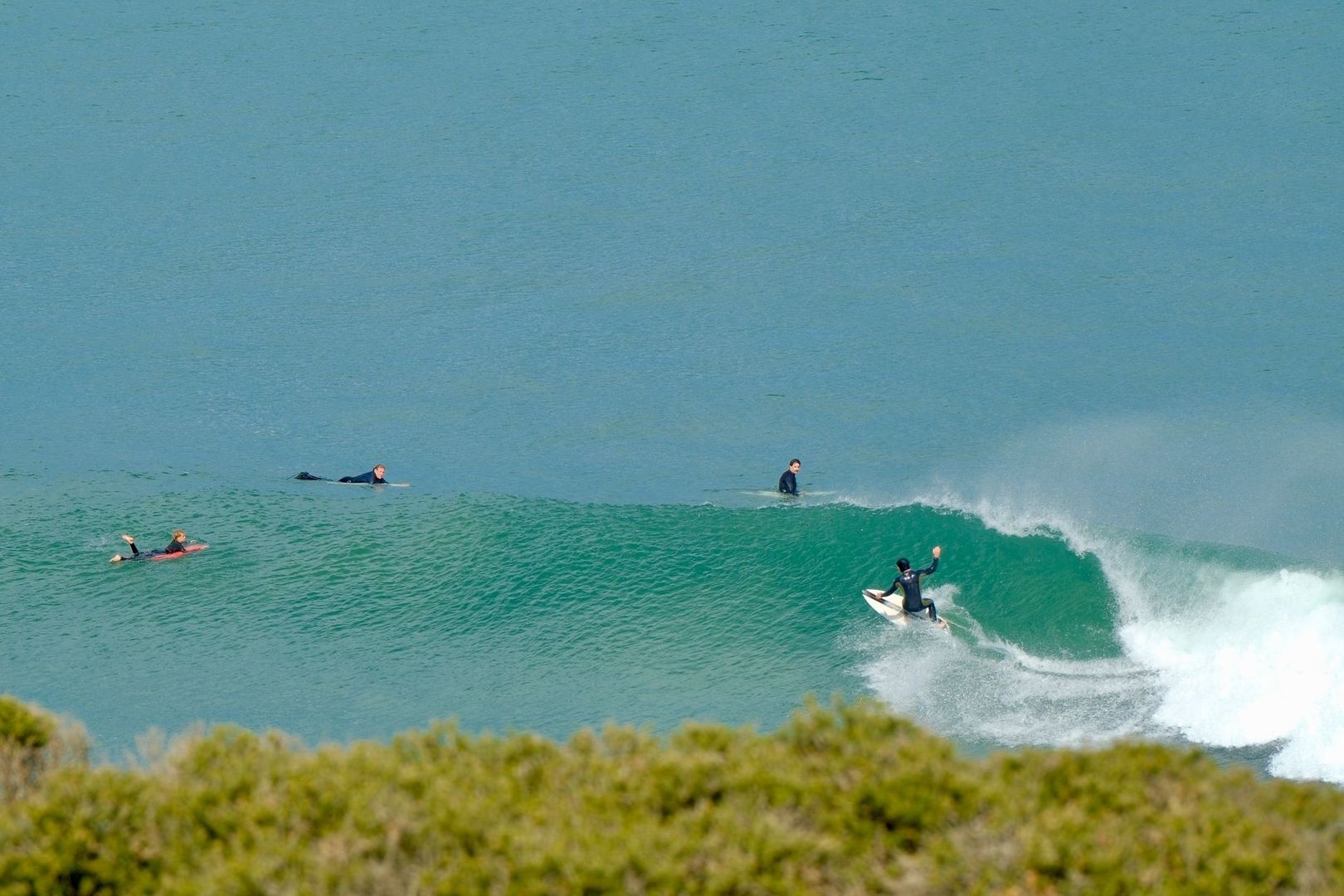
During an aggressive bottom turn, your legs and hips load the board while the wave face changes the water pressure beneath it. The fin must provide enough lateral force to prevent drift, but not so much resistance that speed disappears. Research into dynamic surfer movement and wave interaction, documented across sports biomechanics literature on athlete loading, helps frame this as a coordinated system. Fin geometry cannot replace timing, posture, or rail control, but it can either support or undermine those movements.
Your Step-by-Step Quiver Troubleshooting Framework
Successful fin tuning begins with a precise symptom rather than a vague feeling that the board is wrong. Trackiness, sliding, and speed loss each point toward different possibilities. Trackiness may indicate excessive fin area, insufficient release, too little rocker for the line being attempted, or a rear fin arrangement that is too straight and stable. Sliding out may reflect insufficient depth, excessive angle of attack, an unsuitable foil, or poor rail engagement. Speed death can come from drag created by too much toe-in, a thick foil, excessive fin area, or a board being surfed too far from its efficient trim zone.
- Diagnose the exact turn symptom. Note whether the board feels stuck during the first rail transition, loses grip midway through the turn, or slows only when pointed down the line. Separate equipment behavior from technique by checking whether the problem appears on both frontside and backside turns.
- Inspect foil, rake, and installation first. Look at the fin’s flat or foiled face, check for damage, confirm that the fins are facing the correct direction, and inspect the box alignment. Compare the installed cant and toe visually with the manufacturer’s intended geometry before changing volume or foot placement.
- Test one variable at a time. Change the fin set, not the fin set and stance simultaneously. Surf consecutive sessions in similar wave size and texture when possible. Record speed, rail engagement, release, and hold after several waves rather than judging from one imperfect ride.
- Match the setup to the wave rather than the outline alone. Use lower-cant or more drive-oriented arrangements in steep, powerful surf. Use higher cant, more release, or a looser template in softer pockets. A fin that suits a narrow high-performance shortboard may not suit a wider hybrid, even when both boards have similar tail dimensions.
Keep the test controlled enough to produce useful information. If a board feels slow, begin with a lower-drag option such as a thinner foil, less toe-in, or a smaller rear fin, depending on the symptom. If it feels vague or slides when loaded, add hold through depth, area, a more supportive foil, or a more stable rear arrangement. Avoid making a large correction based on a single session because wind, tide, wave shape, and fatigue can easily disguise a small equipment change.
Fin depth and cant should also be matched to the surface texture. Smooth, powerful faces give the fin consistent water to work against, while turbulent or weak sections demand quicker engagement and cleaner release. A deep fin may feel reassuring in open water but catch or lock the board when the tail is pushed through a tight pocket. Conversely, a shallow, highly canted setup may feel exciting in small surf but lack the authority needed when the wave stands up.
Finally, include technique in the diagnosis. A surfer who stands too tall through the bottom turn may fail to load the rail, making even a well-tuned fin feel loose. A surfer who drives too abruptly from the back foot can overload the fin and create a stall. Keep the chest directed through the turn, compress before the direction change, and release pressure progressively. Equipment tuning works best when it amplifies sound movement rather than compensating for inconsistent timing.
Master Your Existing Board Before Buying Your Next One
Fin cant, foil, and toe-in give an existing board several distinct personalities. A lower-cant, efficient foil can add projection and composure in powerful surf. More cant can free the board in slower pockets. A carefully matched foil can supply hold without burying the board in drag, while measured toe-in can sharpen rail initiation without sacrificing down-the-line speed. None of these adjustments operates alone, but that is precisely why thoughtful tuning can produce such a noticeable change.
Set aside an afternoon for a controlled fin test before chasing new dimensions. Inspect the hardware, identify one handling symptom, make one measured change, and return to the same type of wave with a clear question. Pay attention to the moment the board rolls, the point where the fin loads, and whether speed is carried through the whole arc. That process builds sharper hydrodynamic awareness and gives every board in the quiver a fair chance to perform. The next session should not be a search for magic. It should be a deliberate test of how the board, fins, wave, and body work together.